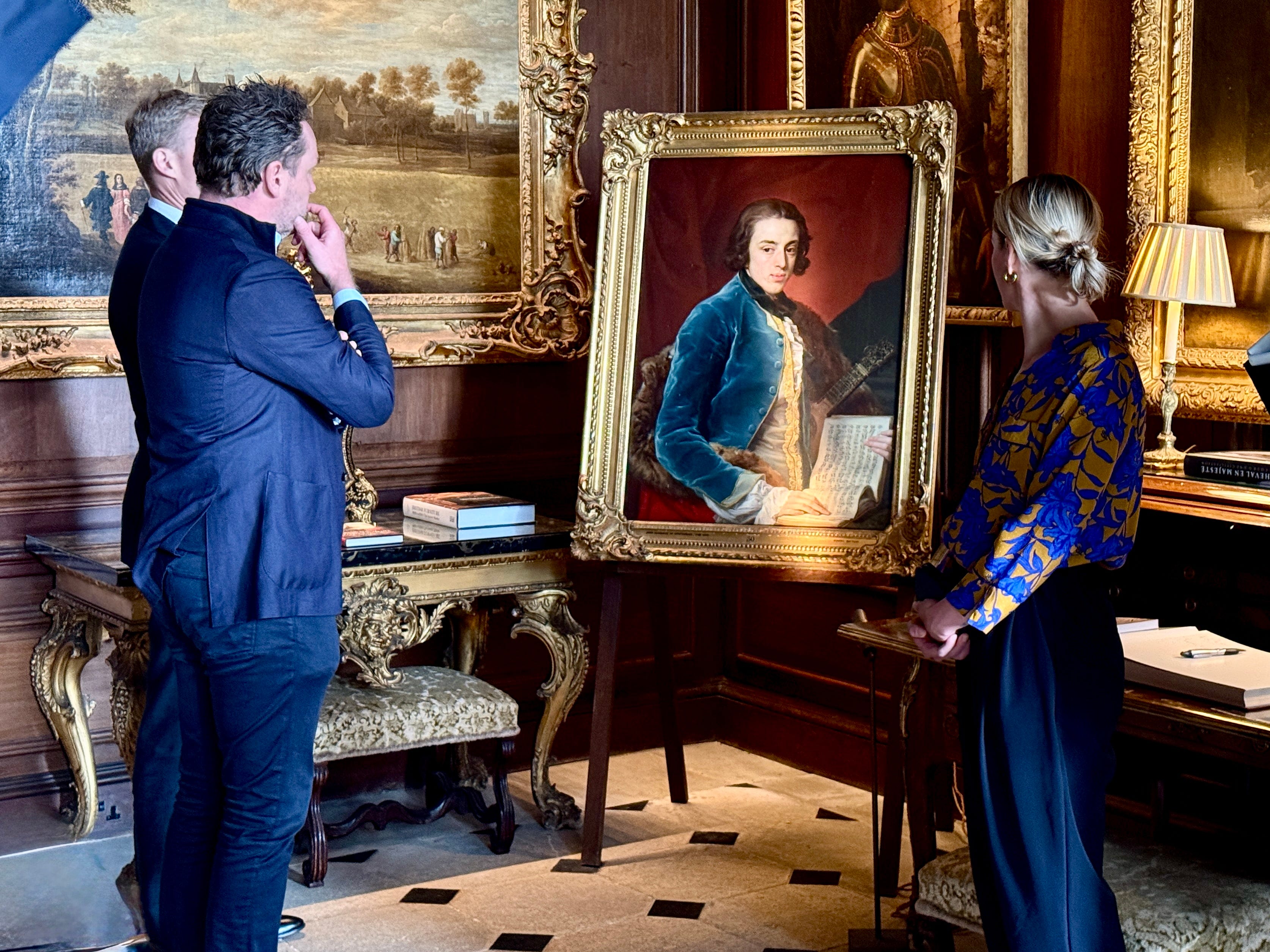
A private tour of the "English Versailles" reveals centuries of secrets, from exiled French artisans to a duchess who would only marry royalty.
Some houses whisper their history. Boughton House breathes it.
Each footstep across its stone and parquet floors slowly releases centuries of stories. On a luminous June evening beneath a painted sky, the Duke of Buccleuch welcomed us to his home for a private tour in support of the HALO Trust. What followed wasn't merely a whistle-stop tour, but a dialogue between people and place in a house that has outlived kingdoms, wars, and fashions. Boughton is still speaking stories with centuries of practice.

The English Versailles, Before It Had a Name
Like many grand English houses, Boughton began with practical roots rather than grand ambitions. The original Tudor manor, built before 1528, centred around a Great Hall. Successive generations expanded it into a sprawling complex, a small village unto itself, essential for Tudor self-sufficiency.
In those early years, England was in ferment. Henry VIII was still married to Catherine of Aragon. Martin Luther's revolution continued to reshape Europe. Across the continent, Francis I and Charles V competed for dominance. Yet in quiet Northamptonshire, foundations were being laid to outlast them all.
1683: When Versailles Came to the Midlands
The transformative moment arrived when Ralph Montagu inherited the estate in 1684 following his father's death. Yet Ralph's rise had been far from inevitable. Until his brother Edward's death in 1665, his prospects remained modest. Four decades later, by 1709, his legacy would be monumental.
His diplomatic postings as Ambassador to France had opened his eyes to a different world. Walking the corridors of Versailles, Ralph witnessed Louis XIV's theatrical display of power and understood that architecture itself could project influence. He returned to England as a man of contradictions: refined tastes and deep family affection existed alongside opportunism and an unscrupulous pursuit of power.
Rather than demolish the existing Tudor structure, Ralph chose to transform it. He introduced French baroque details, most notably mansard roofs inspired by François Mansart. Boughton retained its English bones but gained refined French elegance. The house became bilingual, speaking both English practicality and French spectacle with equal fluency.
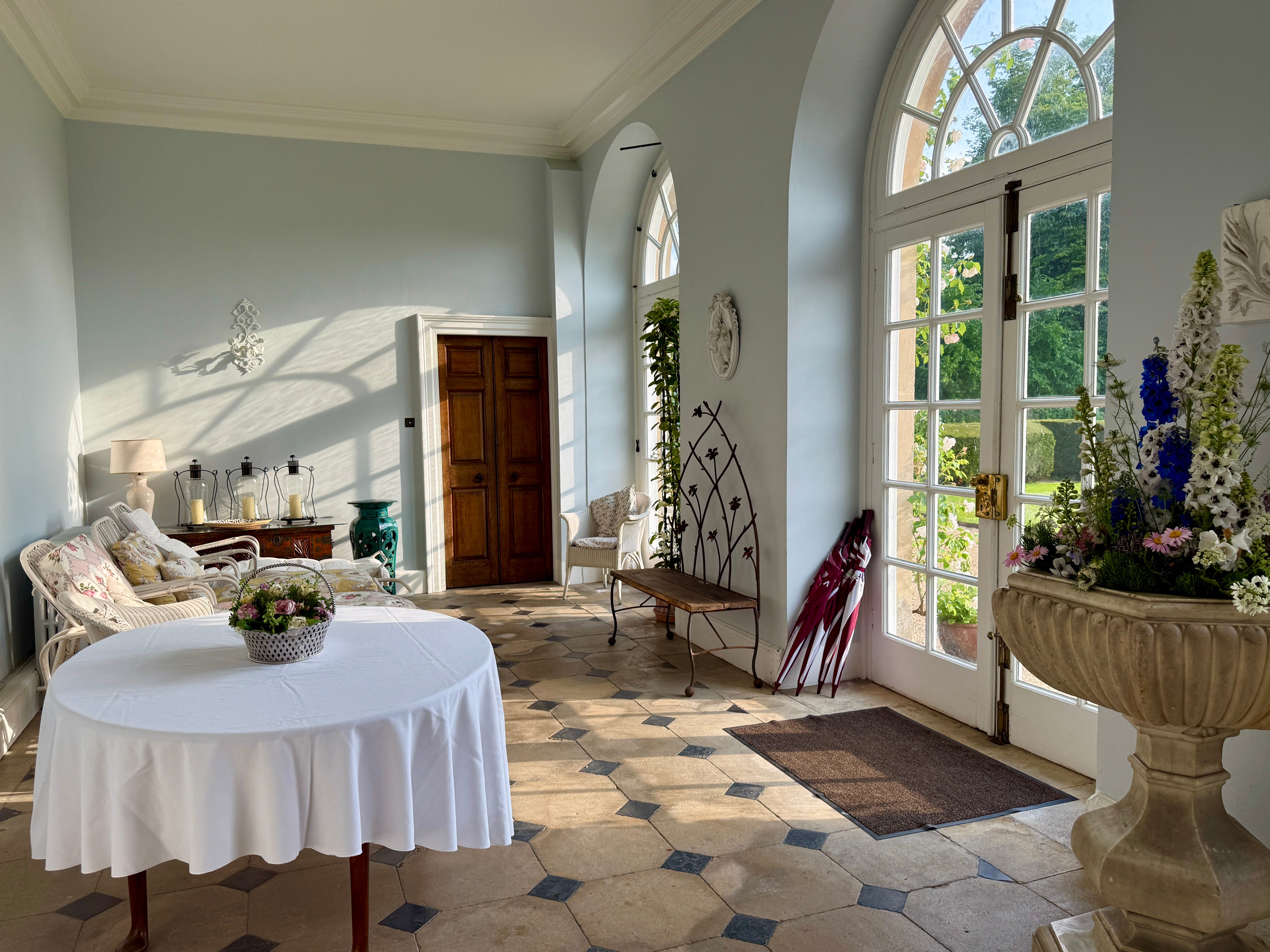
Love, Money, and a Chinese Emperor
Great dreams require substantial funding. Fortunately, Montagu possessed the financial instincts of a diplomat. He married strategically to fulfill his architectural ambitions, though not without controversy.
His marriage to Elizabeth Wriothesley brought both romance and wealth. She was the daughter of Thomas Wriothesley, 4th Earl of Southampton (Shakespeare's patron), and had first married Jocelyn Percy, 11th Earl of Northumberland, making her Countess of Northumberland. When Percy died in 1670, she was left widowed and immensely wealthy. She declared she would only marry royalty, so Montagu appeared before her dressed as the Emperor of China. It was one of his most brazen stunts, and it worked. The Countess accepted, and they married, making her Elizabeth Montagu and eventually Duchess of Montagu when Ralph was elevated to Duke.
Ralph later pursued Elizabeth, Duchess of Albemarle, another wealthy widow. Their marriage was steeped in controversy, as her mental faculties were in question. Courts challenged her ability to consent, yet Ralph secured the union and its fortune.
While Europe convulsed with the Nine Years' War and England adjusted to William and Mary's reign, Montagu secured multiple fortunes and remarkable chapters for Boughton's story. His path wasn't always smooth. He went into exile in France after his brother-in-law Lord Russell was implicated in the Rye House Plot in 1683, returning just in time for the Glorious Revolution in 1688 to reclaim his status.
The Huguenot Gift
In 1685, Louis XIV's revocation of the Edict of Nantes triggered an exodus of skilled French Huguenot artisans. Thousands fled to England, and Montagu welcomed them to Boughton.
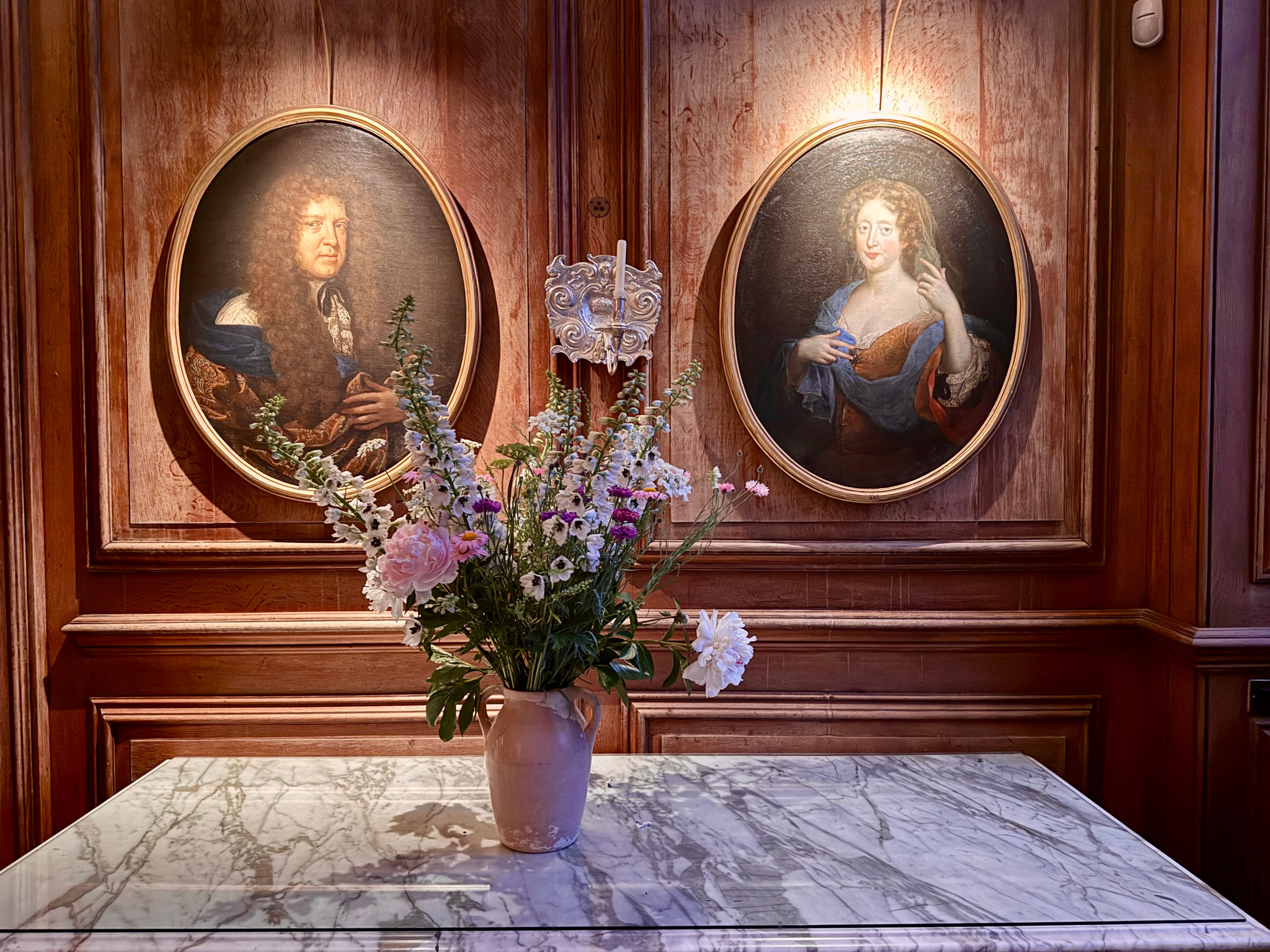
Their impact remains evident today. Boughton's interiors showcase their meticulous artistry: intricately patterned parquet floors, painted ceilings, detailed mirror frames, and exquisite furniture. These artisans transformed exile into enduring beauty, flourishing their French craftsmanship on English soil.
The King Comes Calling
On October 23, 1695, William III arrived at Boughton for a royal visit that would test Ralph's grand ambitions. The State Rooms were barely ready. As with many ambitious building projects, time had run out. Ceilings remained unpainted, and even the State Bed was hastily cobbled together from an old French frame rather than constructed anew in the latest fashion.
Nevertheless, the effect must have been spectacular. From the Staircase Hall, visitors could see directly along the entire sequence, an enfilade that began with the Dining Room, flowed through the Withdrawing Room, culminated in the most important space of all, the State Bedchamber, and concluded with the Blue Damask Room. This progression of rooms, prescribed for the grandest entertaining, remains among the most complete survivals of its kind in any English country house.
Artistic Treasures: The Mortlake Tapestries
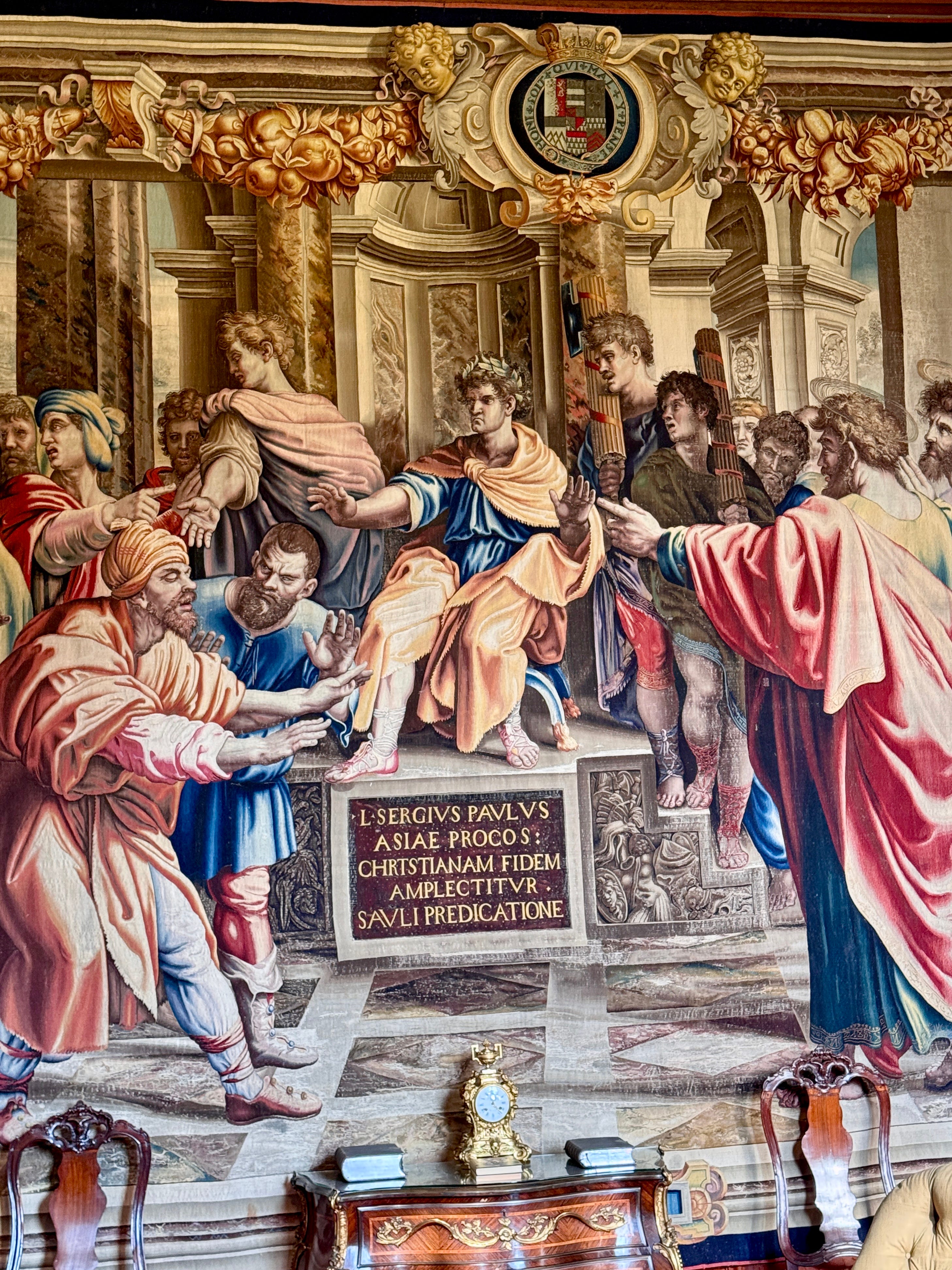
Among Boughton's greatest treasures are the Mortlake tapestries, woven from Raphael's original cartoons commissioned by Pope Leo X. Charles I brought them to England in the 1620s, less than thirty years before his execution. His artistic legacy, however, outlasted his politics.
These masterpieces now hang in the State Bedchamber, their colours remarkably preserved due to the house's intermittent occupation. Shielded from sunlight and changing fashions, their vivid biblical scenes survive intact, rendered meticulously in silk and gold thread. They provide a rare insight into politics and culture in the final decades of the Stuarts, witnessing centuries of royal visits, political negotiations, and the rise and fall of dynasties.
Rooms That Remember
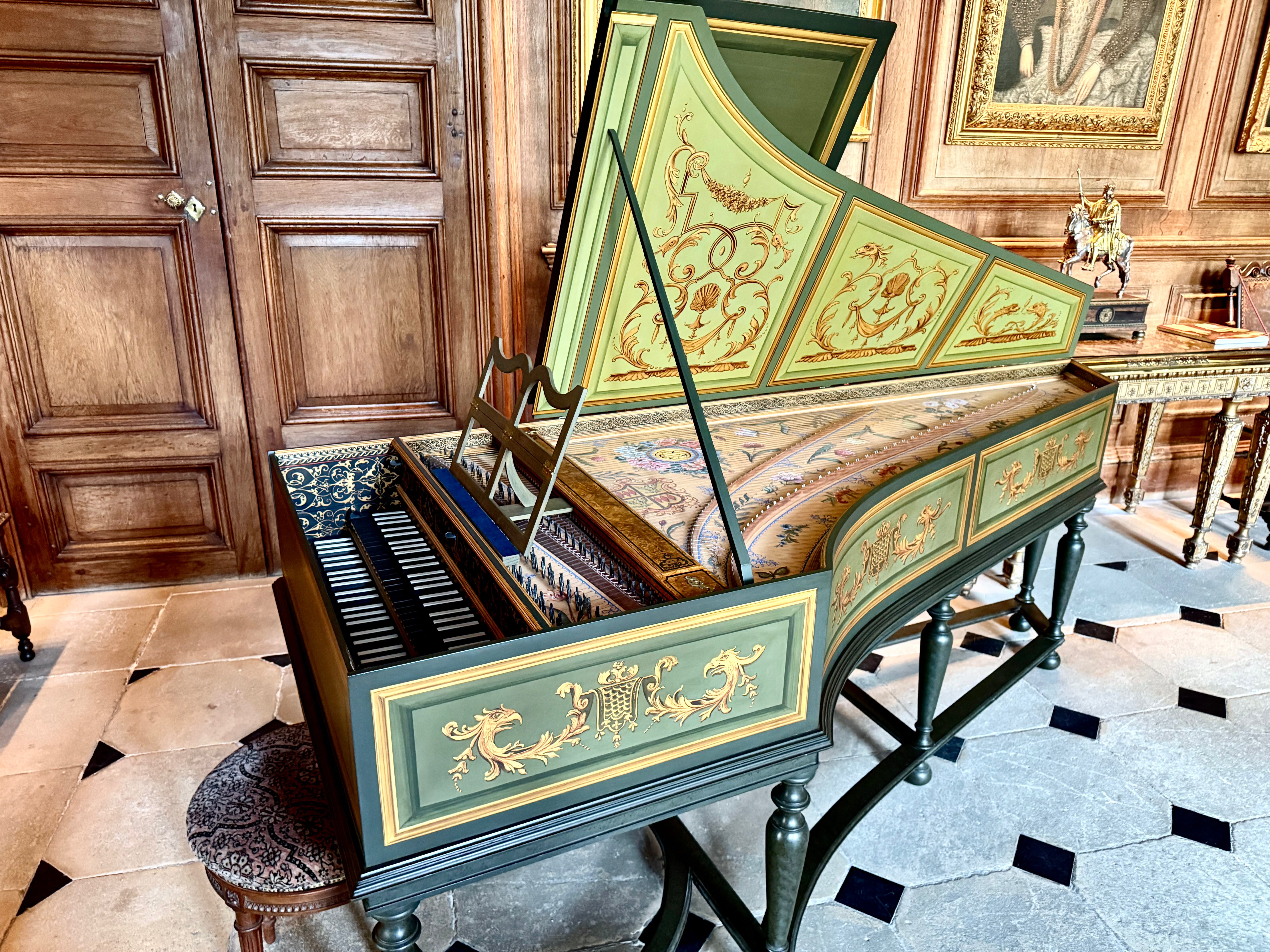
In one drawing room, a harpsichord sits beneath painted beams, its floral soundboard suggesting evenings ending in Scarlatti rather than conversation. Nearby, a writing desk gleams with gold leaf and intricate Boulle marquetry, its drawers hinting at imagined secrets: letters, treaties, seductions.
Upstairs, the mood shifts entirely. The State Bedchamber dazzles like a baroque stage set. Crimson velvet drapes cascade around a massive canopy bed, hastily assembled from that old French frame for William III's visit, no less magnificent for being improvised. The walls display those precious Mortlake tapestries, silent witnesses to centuries of royal visits and political intrigue
The Backstage of Power
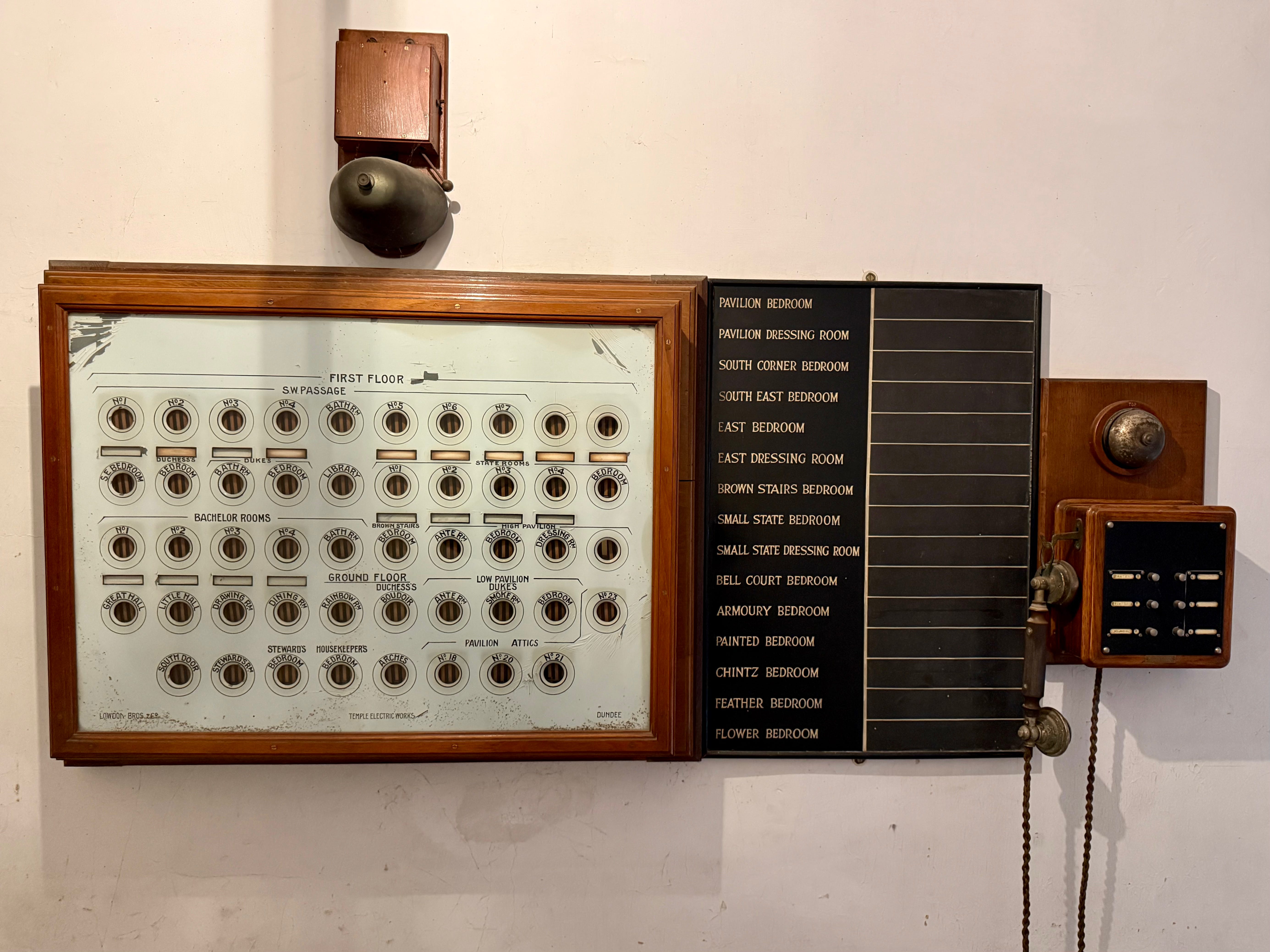
Down a narrow passage, Boughton reveals its domestic workings. A servant bell-board lists rooms like the Duchess's Boudoir, Chintz Bedroom, and Pavilion Room. Each bell linked via copper wire to discreet cords throughout the house. Domestic logistics, orchestrated silently.
Nearby, a chalkboard lists guest assignments. Not numerical rooms but moods: Painted Bedroom, Pavilion Room. Guests weren't merely housed; they were cast.
A Pavilion That Spins
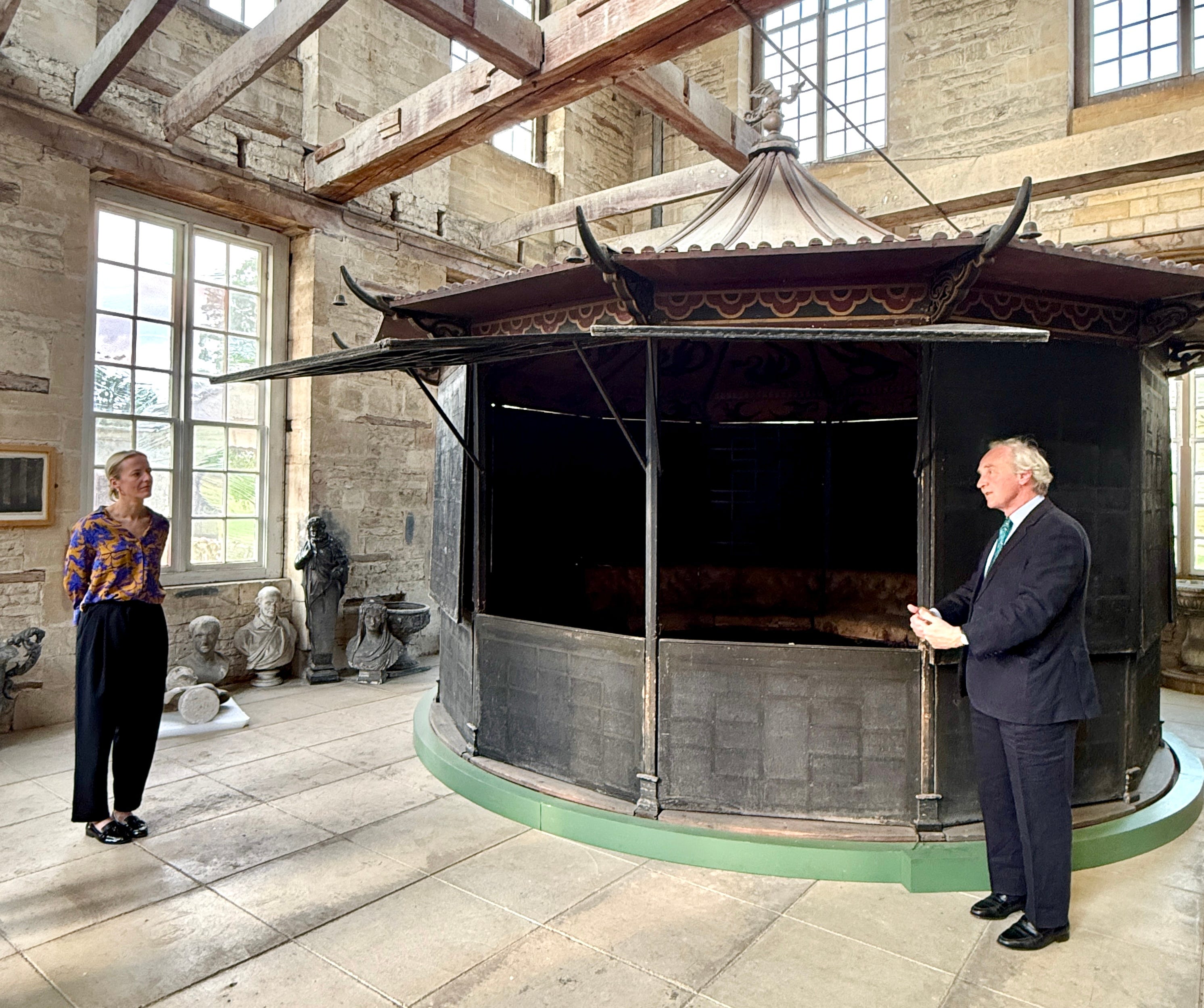
Outside the main house lies an octagonal pavilion, Chinese in style and Georgian in spirit. Once, it rotated gently to allow guests to select their preferred view. This architectural folly reflects Boughton's blend of curiosity and extravagance. It was never short of either.
The Armoury: Beauty with Teeth
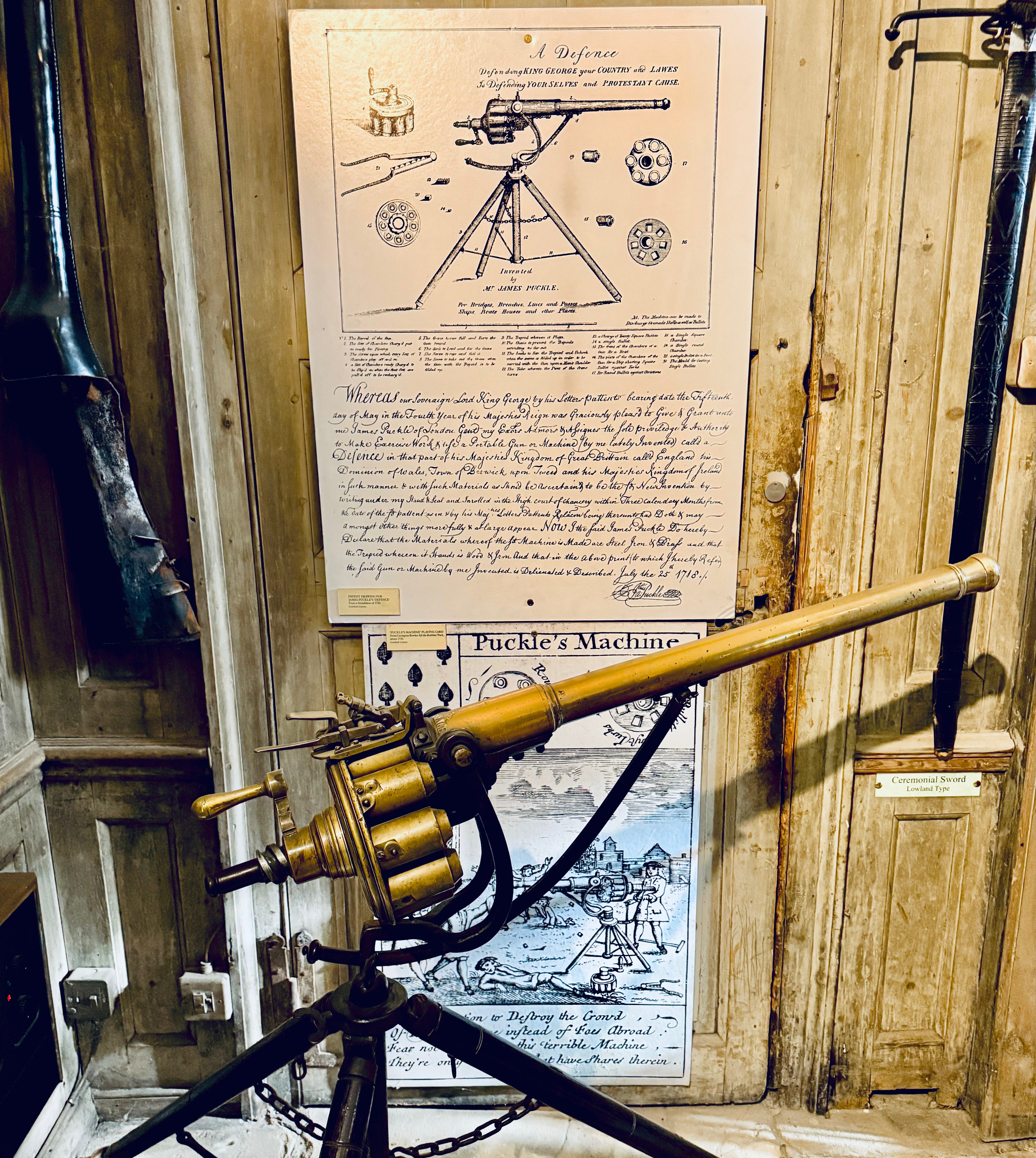
Flintlock pistols and sabres form a silent military sonnet in a gallery near the main hall. Walnut grips gleam, brass fittings softly reflect gallery lights, and barrels shine meticulously. Above them, muskets and carbines range from the seventeenth century to the Napoleonic Wars.
Many weapons still contain original powder and shot, preserved untouched across centuries. In contrast, a Soviet Mosin-Nagant rifle from 1943 stands prominently. Heavy, practical, and brutally effective from the Eastern Front. Boughton's inclusion isn't jarring; it's honest. The house remembers every war it outlived.
A Ceiling That Could Outperform the Sky
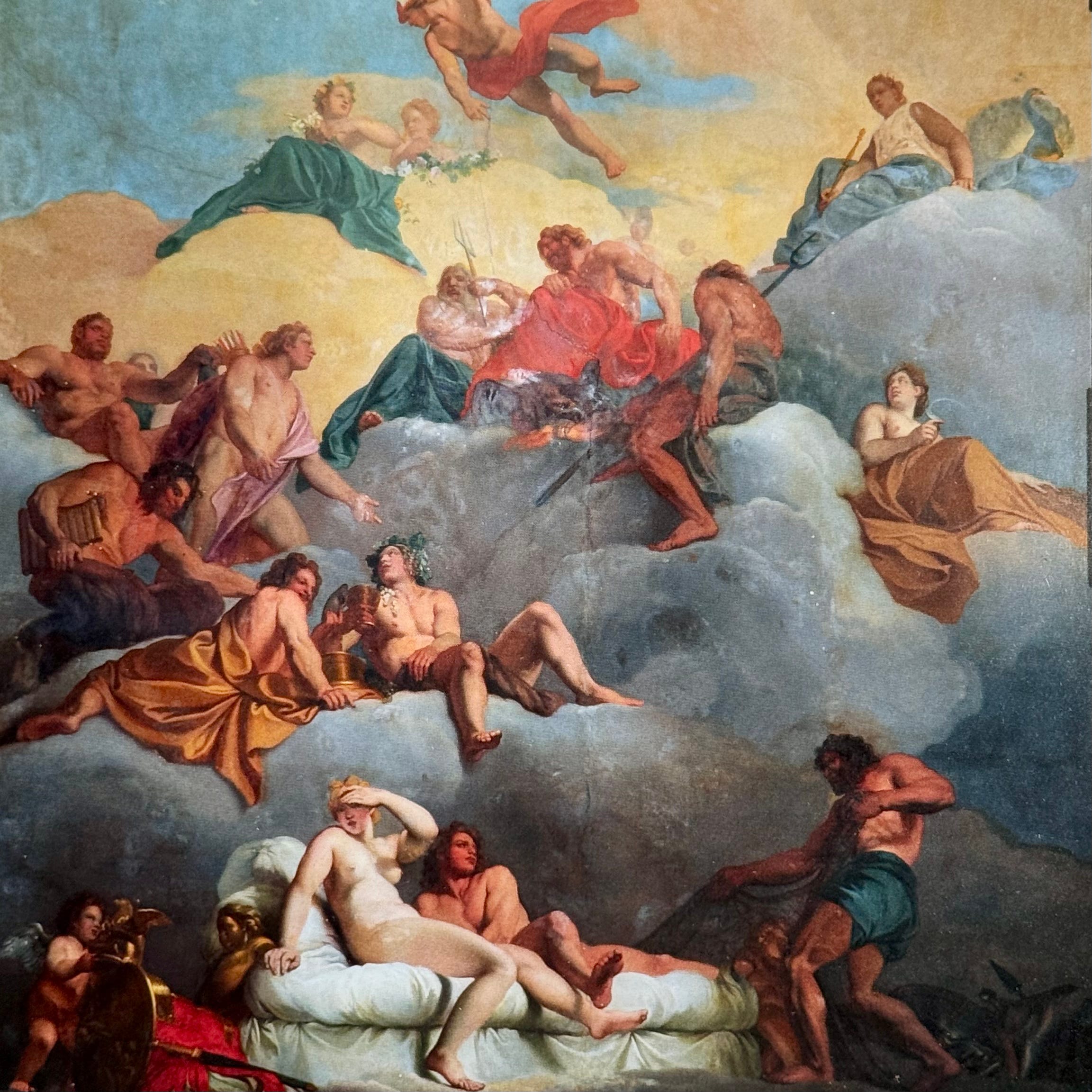
In another drawing room, the ceiling commands attention with figures tumbling through a mythological dreamscape. Gods gesture grandly, muses recline elegantly, cherubs smirk gently.
The Duke drew our attention to a reclining nude painted there, then guided us across the room, eyes fixed above. As we crossed step by step, the figure gracefully rose to stand, an optical illusion that has delighted visitors for centuries.
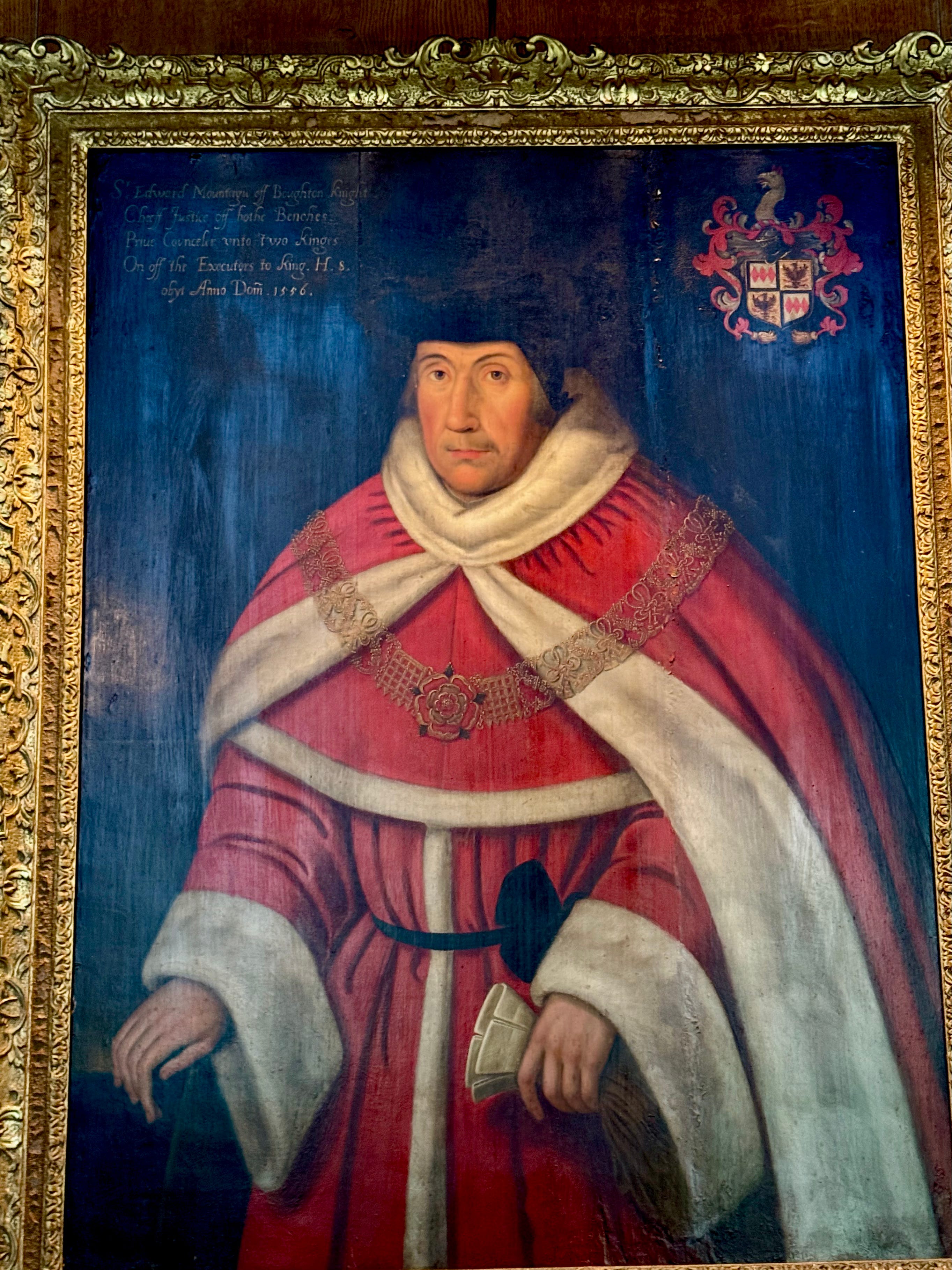
Elsewhere, coats of arms and painted family trees trace the Montagu lineage back to Henry VII, John of Gaunt, and Margaret Beaufort. These aren't decorative genealogies; they're political declarations. In an age when bloodlines defined power, Boughton announced itself as connected, credible, and prepared for ambition
Our Evening
The evening unfolded naturally, without hurry. We gathered on the front steps, surrounded by roses and timeless charm. The Duke welcomed us warmly, not with aristocratic formality but with genuine ease. He proved the consummate host, listening intently, refilling our wine with an instinct for others' comfort refined by centuries of ancestral example.
Inside, we dined beneath portraits accustomed to centuries of conversation. A Blüthner piano waited quietly nearby. Conversation flowed, wine poured, and Boughton listened patiently, as it always has.
The Living Past
Boughton House is neither a museum nor a mere stage set. It is a home that has outlived kingdoms, wars, fashions, and ideas. Letters were written here, music performed, marriages negotiated. Weapons retain their original ammunition, tapestries preserve the ambitions of long-dead kings, and exiled artisans created enduring beauty.
The Duke doesn't just own Boughton; he extends its story. He continues a conversation between past and present that began nearly five centuries ago.
Some houses whisper their history. Boughton speaks it clearly and elegantly, with centuries of practice. England learned French here without losing its voice. Precision became poetry, and every room remembers the value of listening closely.